What do we expect from you – and what can you expect from us?
Doing an experiment at a synchrotron can be a great source of inspiration for students, offering a glimpse of science only possible at large-scale facilities.
We aim to perform experiments that are only possible at a synchrotron – not ones that could easily be performed on a lab instrument. We are available to help set up the beamline and to discuss the experimental procedure and details with the students, but it is essential that the experiments be rooted in the coursework. I.e., the teacher must take an active role in both the planning phase, the experiment, and the data analysis afterward.
Our experience is that teaching experiments have the best learning outcome when they focus on teaching a technique. When the focus is on a research topic or a specific sample, there is a risk that it takes attention away from the experiment/technique. We have further observed that teaching sessions are more efficient when the teacher is already familiar with the beamline – this is not a requirement though.
From you, we expect:
A clear idea of how the experiment fits your course goals
That the students are familiar with the theoretical basis for the experiment
A basic understanding of how the experiment works and how to approach data analysis
A focus on using the unique capabilities of the beamline—not replicating what could be done at a lab-source instrument.
From us, you can expect:
Guidance on planning the experiment
Access to well-tested experimental setups
Training and support with beamline setup and data collection
Support with data analysis tools and workflows
How an experiment can be tailored
We will plan the experiment together to match students and the course. A typical synchrotron experiment includes:
- Safety orientation
- Scientific problem: What is the aim of the experiment, and why is it only possible/reasonable to do at a synchrotron?
- Experimental setup: How will we measure the data?
- Performing the experiment: Let’s measure!
- Data analysis: How do we extract meaningful insights from the data?
- Discussion: Can we answer the scientific problem we set out to answer?
Each of these can be tailored to match the level of the students and the available beam(time) – see below.
Below you can find specifics to consider and describe in your proposal for each of our instruments.
It is possible to tailor the experience of the students by changing each of the experimental aspects to suit the level of the course and the experience of the students.
Experimental setup
The staff and/or teacher show the setup, explaining the different components.
Or the students are left to determine experimental parameters and try different settings, to ensure a deep understanding of how different parameters affect the setup.
Performing the experiment
The experiment can be guided largely by the staff and/or teacher for a faster experiment. Or the students can pick experimental parameters and make a series of measurements with different parameters and/or rates.
Data analysis
We encourage all users to take advantage of the in-house developed scripts for rapid data verification and initial analysis. The staff and/or teacher will go through this analysis at the beamline. We encourage students and the teacher to deepen the analysis after the educational beam time by delving further into the analysis and visualization, and to discuss which analysis methods should be used and which parameters should be incorporated.
Consider a tour instead
If hands-on experiments aren’t essential, we offer guided tours of MAX IV.
A tour is a great way to introduce students to synchrotron science, and we can combine a tour with, e.g., a lecture, a demonstration, or a hands-on data analysis exercise. This is a more accessible option that requires no beamtime. Contact the DanMAX staff to hear more or have a look here.
Where to start? How do I get educational beamtime?
This page is a good place to start! The next step is to contact the staff at DanMAX to discuss the possibilities – all teaching experiments must have been discussed with the beamline staff.
Currently, the procedure is that the beamline lead submits a ‘teaching and education’ proposal on your behalf. This will change in the future – watch this space.
How many students can participate?
We believe it is important for the learning outcome that the students can actively participate and get proper hands-on experience at the beamline. We find that group sizes of 4-6 students are ideal, but groups of up to 8 students are possible.
For larger courses, consider splitting the students into smaller groups, spending less time at the beamline and more time on data analysis while at MAX IV.
How much time is needed?
The required time for a T&E beamtime varies, both by the experiment and the level of detail. Below we list the ‘standard T&E’ experiments we offer and suggest how much time they require. For teachers experienced with the beamline, it is possible to continue the experiments until the next user group is scheduled. The beamline staff is available during normal business hours, but on-site support cannot be expected during the evening and night.
Can high school students participate in a hands-on experiment?
No, unfortunately not – but we encourage you to get in touch with us to arrange a tour of MAX IV!
Travel, accommodation, and food…
We cannot arrange travel, accommodation, and food. You will have to arrange this. We are happy to provide suggestions. You may consider seeking funding from other sources.
Experiment catalog
Here you can find the experiments we suggest. Contact us if you do not find anything you think matches your course – we are happy to discuss and potentially develop new T&E experiments.
Temperature-driven phase transitions
Using the PXRD2D instrument’s high speed, we can collect data while continuously ramping the temperature. Available samples include BaTiO3 (ferroelectric), VO2 (metal-insulator), and KH₂PO₄ (ferroelectric, low-temperature), all of which exhibit one or more phase transitions.
The students can e.g. experiment with heating/cooling rates, and study potential hysteresis effects. They can further experiment with photon energy, detector positioning, and beam size.
The data can be directly visualized, and phase transitions can be located using, e.g., Pearson correlation maps. Single peaks can be fitted as a function of temperature. Deeper analysis includes Le Bail or Rietveld refinement and extraction of, e.g., thermal expansion parameters.
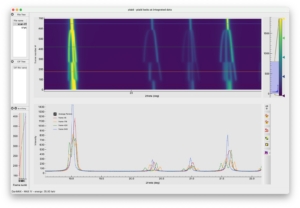
The experiment can take as little as 2 hours (after setup), but 4 hours or more is suggested.
The art of μXRD and μXRF mapping
The aim of the experiment is to give the students a better understanding of how to design and prepare for a diffraction experiment, perform a powder diffraction experiment (μXRD and μXRF mapping of flat samples), and use simple data analysis strategies to analyze tens- to hundreds of thousands of diffraction patterns. The sample used for this experiment is a section of an authentic oil painting, and the students will attempt to determine the composition of the paint pigments.
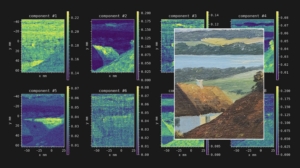
The students can be involved in the configuration of the beamline, i.e. photon energy, detector positioning, and beam size. They can also experiment with scanning rates and step size.
Existing Python scripts are used to perform simple data analysis on large datasets. The participants will take part in selecting the most suitable analysis strategies. The core concepts covered in the practical include beamline configurations, powder diffraction and X-ray fluorescence, raster scanning, and large dataset analysis.
For this experiment, we suggest 4-6 hours at the beamline and 2-3 hours of data analysis. The time can be reduced if the beamline is already set up and students only participate in data collection.
Also available as an analysis-only exercise on pre-measured data.
MORE INFORMATION COMING SOON!
Optimizing for phase contrast µCT
In situ tensile testing
We are busy building the instrument – but will start offering it in the T&E program as soon as possible. Come back soon!