Energy flowing from lithium cells.

The liquid tech of self-healing batteries

Materials scientists seek to develop better lithium (Li) metal batteries by improving structural stability and reducing dendrite formation that causes battery failure. It is well-known that instability at the metal electrode-electrolyte interface causes lithium dendrite growth, leading to short-circuiting and formation of inactive lithium. New electrolyte designs that control lithium deposition during cycling may solve these issues. Researchers are investigating liquid crystalline (LC) electrolytes under different conditions at MAX IV’s ForMAX beamline to determine whether these electrolytic materials are possible to align on demand. Successful results hold promise to propel the development of Li metal batteries as a next-generation power solution for electric vehicles and energy storage systems.

Highlights

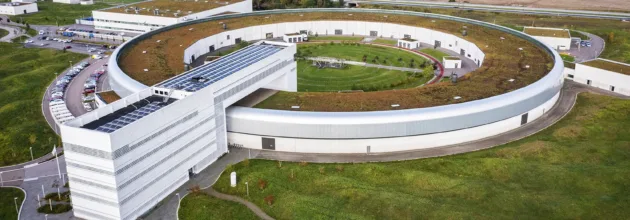
Drone image of MAX IV from above, surrounded by green landscape and the horizon.

A record year for research at MAX IV

MAX IV is making significant societal contributions in terms of record-high scientific productivity. In 2023, the number of publications increased by 51% compared to the previous year, and the number of unique users increased by 31%. Moreover, the number of proposals submitted in the most recent Open Call was higher than ever.

9y9a9159 2

Conceptual design for three potential new beamlines developed with WISE

After successfully bringing the first 16 funded beamlines into operation, we now look into the future. In collaboration with the Wallenberg Initiative Materials Science for Sustainability (WISE), funded by the Knut and Alice Wallenberg Foundation and together with the scientific community, MAX IV will develop the conceptual designs for three potential new materials science beamlines.