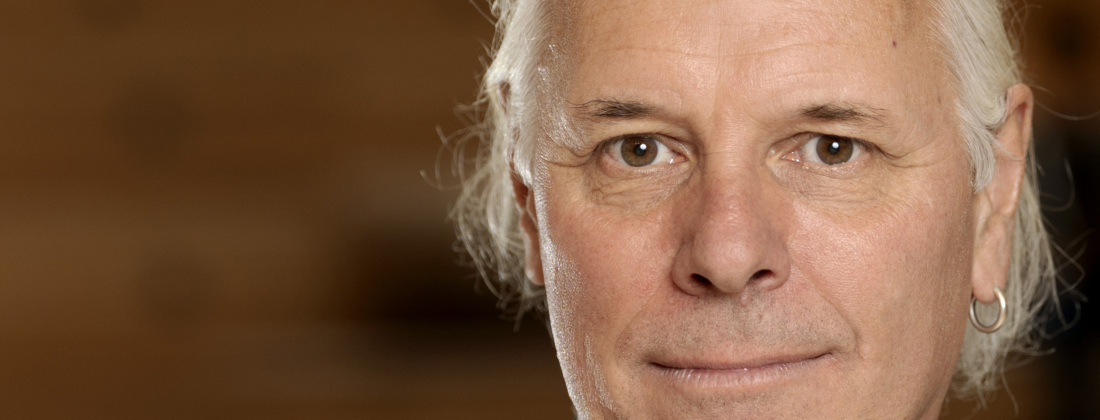
It is with great sadness that we received the news that Professor Richard Neutze passed away on 28 April 2026.
Richard played a pivotal role in the development and success of MAX IV over many years. As a scientific pioneer in structural biology using X-rays, he was one of the driving forces behind establishing the scientific case and securing funding for the macromolecular crystallography beamlines BioMAX and MicroMAX at MAX IV. He subsequently served as the spokesperson for MicroMAX and was actively engaged in several other beamlines, including FemtoMAX and CoSAXS, while in recent years developing a particular interest in the opportunities offered by X-ray imaging. Long before MAX IV became operational, Richard was a trusted advisor and strong supporter of the facility, contributing his expertise, vision, and enthusiasm in numerous ways. He introduced not only generations of PhD students to MAX IV but also many undergraduate students through annual course visits, inspiring young scientists and helping to build a vibrant user community. Richard also served as a member of the MAX IV Board from 2014 to 2019 during a crucial phase of development of MAX IV.
After obtaining a PhD in Physics in New Zealand, Richard moved to Oxford, where he began his research in molecular biophysics in the group of Janos Hajdu. This marked the beginning of an extraordinary scientific journey guided by Richard’s curiosity, enthusiasm, creativity, and exceptional scientific talent and drive. Richard moved to Uppsala University in Sweden in 1997 and became Professor at the University of Gothenburg in 2006.
In 2000, Richard and colleagues published a landmark paper in Nature describing how femtosecond X-ray pulses can be used to overcome radiation damage and image structures with X-rays. He subsequently continued to make major contributions to structural biology, particularly in the area of time-resolved studies of macromolecules using crystallography and scattering at synchrotrons and X-ray free-electron lasers. His research also advanced our understanding of membrane-bound proteins involved in transport and bioenergetics.
Richard will be deeply missed by his friends and colleagues at MAX IV. His scientific achievements, generosity, and commitment to the scientific community have left a lasting legacy that will continue to inspire future generations.