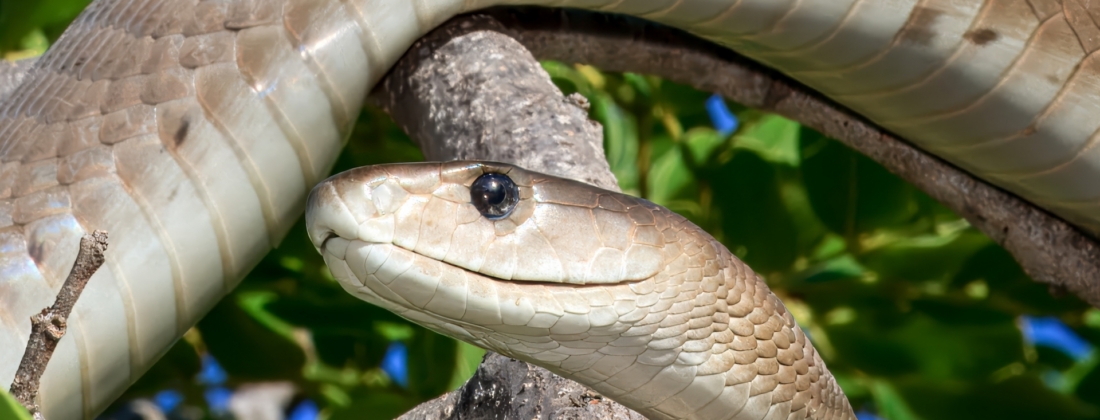
When venomous snakes in sub-Saharan Africa strike at rural residents, antivenom treatment may come too late or lack efficacy. An international team of scientists took on the challenge to create a more effective medicine for snakebites, and after many years, developed a powerful, broad spectrum nanobody cocktail which both neutralizes the venom in the bloodstream and prevents local tissue damage. Their study reported in Nature includes data from MAX IV’s BioMAX beamline.
With the diversity of venomous snake species found in tropical regions, there is a strong, unmet need for broad-spectrum antivenom. The standard treatment today consists of undefined mixtures of antibodies derived from immunized horse or sheep plasma. This carries a number of issues, including strong immune reactions in patients, batch variations with low concentrations of therapeutically active antibodies, as well as high cost and supply chain challenges.
To move past hurdles with plasma-derived antivenoms, researchers designed experiments using camelids, specifically llamas and alpacas, known to produce antibodies with small, stable binding domains known as nanobodies. After immunization with 18 different snake venoms from cobras, rinkhals and mambas, the host animals’ antibody genes were used to generate nanobody phage libraries. With these libraries, the group isolated 8 nanobodies that were combined into a single nanobody cocktail effective against toxins from 17 of the snake species. Results show the mix prevents lethality in animal tests and reduced tissue damage at the bite site.
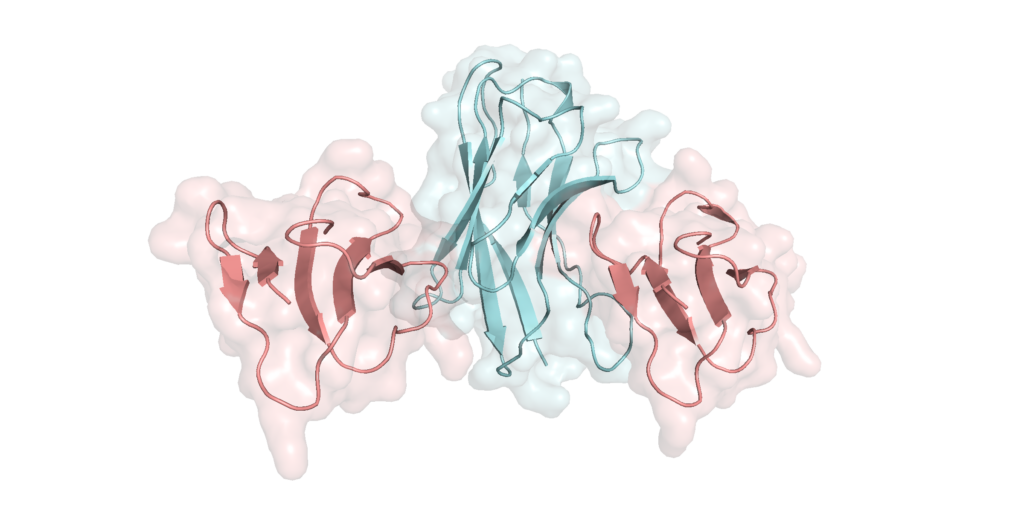
The experiment utilized AI model AlphaFold3 to generate search models for solving toxin crystal structures as well as predict nanobody-toxin complex structures. Crystallography measurements at BioMAX beamline revealed the actual 3D structure of 2 of the nanobody-toxin complexes with VHH1 and VHH5 nanobodies.
The researchers could observe how each nanobody bound to its toxin—information key for understanding the therapeutic mode of action, explained study author Andreas H. Laustsen-Kiel.
“One genuine surprise along the way, which could not have been done without BioMAX!, was that one of our anti-cytotoxin nanobodies (VHH1) seems to be ‘biparatopic,’ binding two different sites on the same toxin at once — behaviour only once reported previously for a nanobody, which we hypothesize explains why it neutralized better than the alternative,” said Andreas H. Laustsen-Kiel, Head of Section for Biologics Engineering at the Technical University of Denmark (DTU).
A village clinic
The knowledge that snakebites can be debilitating or fatal hits especially hard seeing it first-hand. Andreas encountering this situation when visiting a village clinic near Arusha in Tanzania during a family trip over a decade ago. It inspired him to steer his research towards finding better, safer antivenoms.
“I met two children, aged around five and eight, who had been bitten by spitting cobras just days earlier — one had lost an arm at the elbow, the other a leg below the knee. The nurses explained that amputations like these were common because victims often arrived late and good quality antivenom often wasn’t available in time. It provoked me — I remember thinking, ‘why isn’t anyone doing something about this?’”
Years later Laustsen-Kiel is part of a global research group that has become that ‘anyone’ who can solve the major challenges for better antivenoms.
To build on the success of their formula, the researchers are currently engaged in several pursuits. They aim to develop other simple cocktails through discovery of more nanobodies capable of neutralizing whole toxin subfamilies. A similar recombinant antivenom composed of five nanobodies (VHHs) for cobras and king cobras in India was recently completed, with plans to expand to other Asian venoms. The group also recently tested a method to produce nanobody mixtures using a low-cost E. coli fermentation process, which will enable more affordable production of antivenom than standard manufacturing.
Getting a high-resolution, unambiguous 3D structure of the nanobody bound to its toxin target required a bright, stable synchrotron beam and remote data collection — BioMAX let us collect complete, high-quality diffraction datasets efficiently, which was essential for pinning down exactly how these nanobodies grip their targets. – Andreas H. Laustsen-Kiel
The same discovery method utilizing phage technology could extend to other research areas as well. The application of neutralizing nanobodies against diverse toxin variants holds potential for the treatment of immunological conditions and infectious disease, according to Laustsen-Kiel.
His ongoing work includes investigations with the PROTÆCT (Precision Regulation Of Toxin Activity through Environmentally-Controlled Targeting) project and the Wellcome project, Recombinant snakebite antivenom for sub-Saharan Africa. A future aim is to launch a company to further develop the latest prototypes of recombinant antivenoms.