Collaboration with the user community is a core part of MAX IV’s work. One joint initiative is enabled through close interaction with universities, with postdoctoral researchers dividing their time between a university research group and the synchrotron.
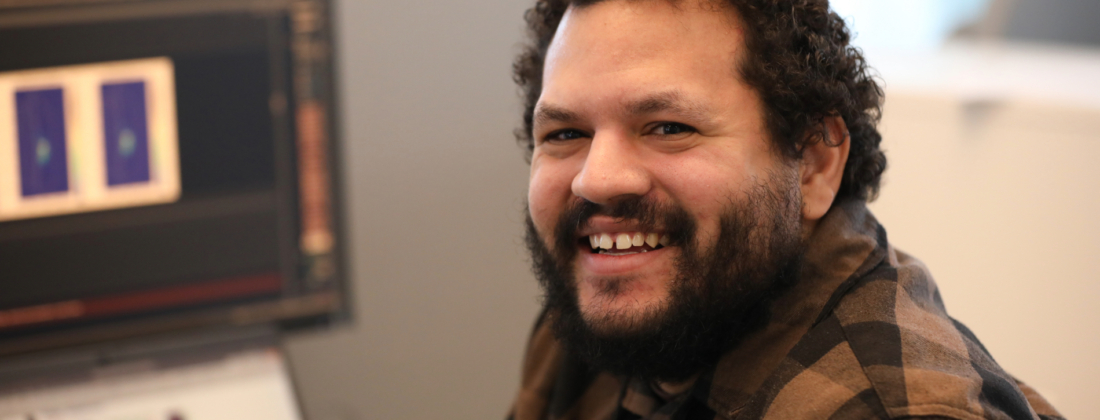
At MAX IV’s hard X-ray nanoprobe beamline, NanoMAX, Leonardo Oliveira is one of these shared postdocs.
The postdoc’s perspective
Oliveira is a part of Jesper Wallentin’s research group in the Division of Synchrotron Radiation Research at Lund University. He uses focused nano X-ray beams to learn how ferroelectric thin films evolve when an electric field is applied. Then, he studies how these changes relate to the material’s electric behaviour, which in turn enables the production of better nanoelectronic devices.
“This position balances my desire for hands-on experimental work with the opportunity to deep scientific data analysis, which is a skill I’ve really been able to develop more here,” he said. “The best part is seeing the full cycle of an experiment, from idea to measurement to understanding, and learning along the way from both colleagues and users.”
Oliveira said that he takes full advantage of his position at the beamline and strives to make the most of his time in the hutch.
“It’s a great opportunity to learn from the beamline scientists and from users from all over the world who rely on NanoMAX for their experiments,” he said.
The split position allows Oliveira to gain extensive experience in the different steps of the experimental process. In Wallentin’s group, the focus tends to be on planning experiments and interpreting data, while at NanoMAX, it is on keeping the beamline running smoothly.
“Being in this joint position is really the best of both worlds,” Oliveira said.
The PI’s perspective
Wallentin’s group has previously shared two other postdocs with NanoMAX, including Megan Landberg, who is now a permanent member of the beamline’s staff.
“The postdocs learn much more about how a beamline works than they would as a user,” Wallentin said, adding that the arrangement allows for complex method development projects as well.
What originally started as a favour to NanoMAX has developed into a unique collaboration with clear benefits for both parties.
MAX IV’s perspective
Imaging group manager Karina Thånell said that the long-standing collaboration has been a resounding success.
“We get a steady stream of good proposals from these groups, which cultivates a more mature user group to work with on advanced experiments and technical development,” Thånell said, highlighting how the deep collaboration creates opportunities for both beamline and research group. “In turn, they get an experienced person at the beamline, who is well-prepared for beamtime and skilled at getting the best out of the beamline,” she added.