2021 sampling martiansaltanalog

Salts of the Earth aid understanding of Martian salt chemistry

How does one learn more about the characteristics of the Martian atmospheric chemistry and climate system while seated 56 million plus kilometres away? Using MAX IV’s HIPPIE beamline, an international research group studied the surface solvation of salts from Earth’s Qaidam Basin, which bear close resemblance to Martian salts and how these influence the respective planet’s surface. The work also establishes the feasibility of the APXPS technique for future studies with Martian salts.

Highlights

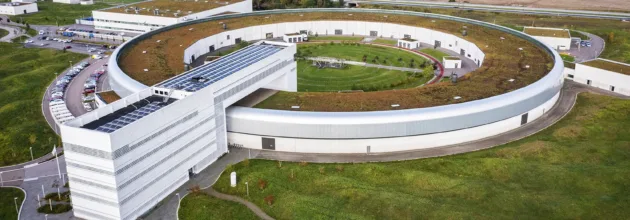
Drone image of MAX IV from above, surrounded by green landscape and the horizon.

A record year for research at MAX IV

MAX IV is making significant societal contributions in terms of record-high scientific productivity. In 2023, the number of publications increased by 51% compared to the previous year, and the number of unique users increased by 31%. Moreover, the number of proposals submitted in the most recent Open Call was higher than ever.

9y9a9159 2

Conceptual design for three potential new beamlines developed with WISE

After successfully bringing the first 16 funded beamlines into operation, we now look into the future. In collaboration with the Wallenberg Initiative Materials Science for Sustainability (WISE), funded by the Knut and Alice Wallenberg Foundation and together with the scientific community, MAX IV will develop the conceptual designs for three potential new materials science beamlines.