A new study presents a multi-angle approach to investigating the step-by-step breakdown of vegan proteins in the stomach. It is a research area that is becoming increasingly important as we seek new protein sources to reduce climate impact. Protein digestion is crucial for both the absorption of nutrients and the immune response to potential allergens. A gel of pea protein was exposed to artificial gastric fluid, and the researchers used several techniques to study how the gel was broken down into smaller parts.
We asked a few questions about the experiment to Davide Schirone, Postdoctoral fellow at Physical Chemistry Lund University, and one of the authors behind the study.
Why is it important to study the digestion of plant-based proteins?
The adoption of intensive farming practices for meeting the demand of food products from wealthy countries imposes a significant strain on the environment: most of the arable land is used to cultivate grain and soy for animal feed, impacting biodiversity but also exacerbating global inequality. Indeed, marginalised populations are compelled to prioritise crops for animals over food for their own sustenance. Within this landscape, the possibility of using plant proteins, as ingredients in foodstuffs, is a good strategy to move towards a more sustainable processing strategy. This idea is already the centre of attention of many companies and start-ups all over the world. Sweden itself, with global players like Oatly and DUG, has a strong tradition in plant-based food alternatives, using oat and potato polypeptides as stabilisers in different types of products.
Why did you choose pea protein?
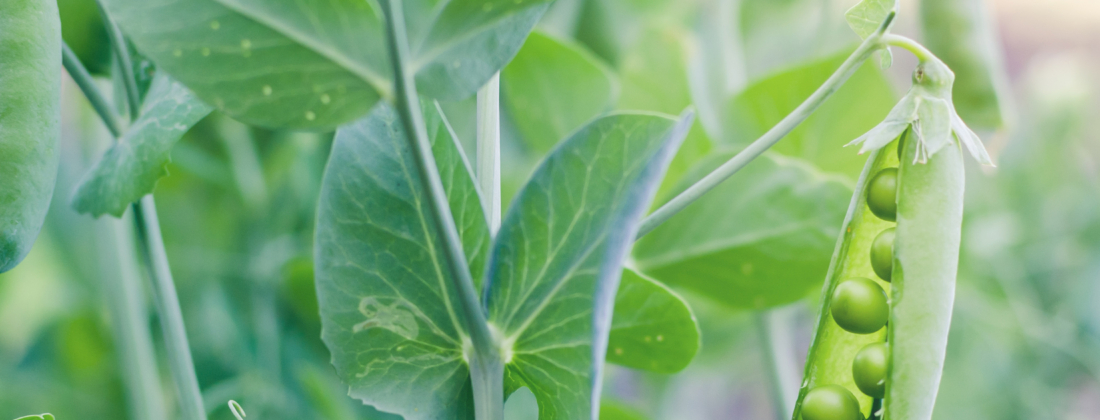
Pea proteins have recently gained considerable attention because they exhibit properties similar to soy proteins and can be used to fine-tune the rheological (how liquids behave, viscosity, for example, editor’s note) characteristics of food, the same properties that determine mouthfeel and texture. Understanding how pea proteins form networks in solid foods helps us design products that are not only more nutritious but also more appealing, thus facilitating the transition toward sustainable diets. Moreover, unlike soy, pea proteins are associated with a much lower incidence of allergenicity, making them a more inclusive option for consumers following plant-based diets.
What was the most important conclusion from your experiment?
From the pea protein perspective, we discovered that digestion proceeds through a two-step process. Initially, the pea protein gel swells and responds to the acidic environment of the stomach. Only afterwards, the enzyme pepsin begins breaking down the protein network. Interestingly, we observed that certain proteins embedded within the gel matrix are quite resistant to digestion and retain most of their native structure throughout the process.
What does it mean that some proteins are resistant to digestion?
We are still referring to digestion at the stomach level. It is very likely that these proteins are further digested in the intestine, where other enzymes work together with ‘good’ bacteria. The fact that some of the pea proteins that contribute to the gel structure are not rapidly digested means that they are not immediately absorbed as small, essential nutrients (e.g., amino acids). Pea seeds remain a good protein source, as only a few of the proteins we can extract appear to be difficult to digest. With different purification systems, we can select the more nutritious proteins and use those in food products. While this technology is already established at the laboratory scale, our recent findings clearly show how important it is to scale up such processes to support the development of better food products.
What will be the next step?
Our story on the digestion of pea protein hydrogels is still ongoing. So far, we have focused on the solid phase of the gastric system. However, real digestion involves a heterogeneous mixture, the gastric digesta, composed of both solid and liquid components. Our next goal is to explore the liquid phase and identify which proteins are released into solution during digestion.
Experiment facts
Hydrogel
A polymer network that can hold large amounts of water. A well-known example of a food hydrogel is gelatin, found in gummy candies and marshmallows.
X-ray and neutron scattering
In a scattering experiment, the sample will be studied using a beam of X-rays or neutrons. The beam is split into many directions, or scattered, by the sample. The scattered beams will be captured by a camera that is sensitive to X-rays or neutrons, a detector. The researchers can interpret the image from the detector to learn about the size and shape of particles, such as proteins, for example, in the sample.
Study methodology
The researchers established a new methodology to study the digestion of solid foods using synchrotron SAXS, providing both an experimental setup and a data analysis framework for future studies. This approach was validated through a comparison between SAXS measurements performed at MAX IV and neutron scattering experiments conducted at the ILL in Grenoble. Unlike hard X-rays, neutrons do not damage the sample, and the consistency between the two techniques confirmed the reliability of our SAXS-based method. In their next experiment, the researchers plan to combine SAXS with size-exclusion chromatography (SEC) to disentangle the structural information of individual proteins liberated during the gastric process. Collaboration with MAX IV, particularly with the CoSAXS beamline, will be pivotal for advancing these studies.