MAX IV’s first artist in residence, Jennifer Rainsford has revealed her plans for a science-inspired artwork crafted with X-rays and experiences from the experimental halls of MAX IV. With insights from ForMAX, NanoMAX and other beamlines and the laser lab, her new exhibit and film will offer the public a fresh perspective and closer look at research conducted at Sweden’s large-scale research infrastructure, MAX IV.
The Artist in Residence programme is designed to highlight activities at MAX IV, while also spotlighting Lund University as Sweden’s leading cultural university by offering new contexts for artistic exploration and exposition. Thanks to generous funding by the Gyllenstiernska Krapperup Foundation, a chosen artist is offered an onsite residency to learn about the science and the 4th generation synchrotron in order to develop an artistic project which reflects current research or techniques in X-ray science.
“This programme offers a rare chance for talented professionals in vastly different fields to collaborate. Artists and scientists are both curious and creative, and it is those qualities that lead to new ways of thinking and new discoveries,” said Heidi LaGrasta, MAX IV Outreach Officer and co-coordinator for the Artist in Residence programme. “I am eager to see what happens when we dissolve the boundaries between these two fields and allow for a more expansive understanding and investigation of research here at MAX IV.”
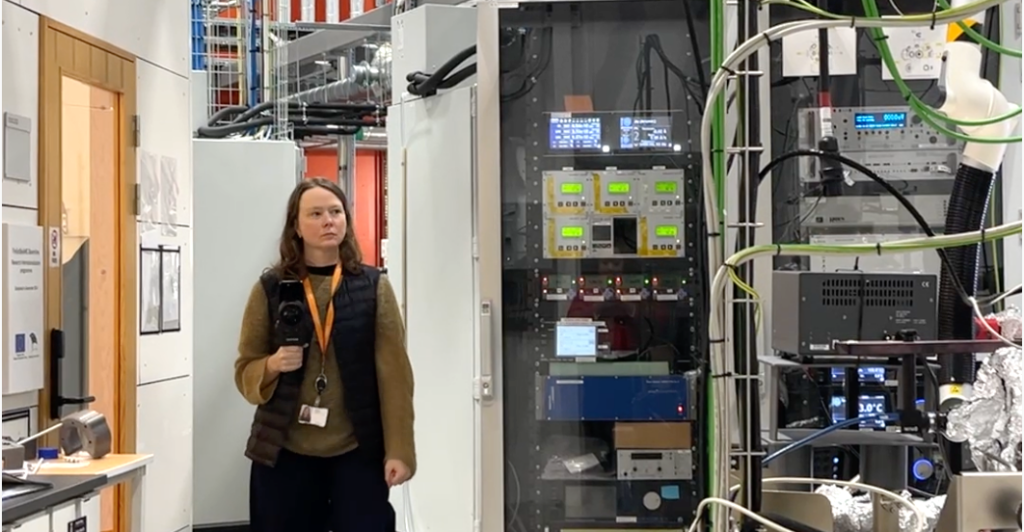
The Artist in Residence includes the possibility to utilise beamtime from MAX IV’s suite of 16 beamlines. This level of access is a first at the facility and an important aspect, establishing the MAX IV programme ambitions in line with other synchrotron programmes globally.
“In terms of expectations, I felt very welcomed and that there was a generous curiosity into what I could explore and was expected to do. There was a great openness to see what comes out of letting an artist explore all aspects of the facility and I have met and spoken to all different kinds of staff and users during my first months here,” said Artist in Residence Jennifer Rainsford.
When I had spent the first few weeks at the synchrotron, I had the feeling of being portalled into the future because many of the things that I looked at are future materials and experiments and the scientists are working on a time span, exploring something that the rest of the world will experience much later.
— Jennifer Rainsford
Through an artist’s lens
Rainsford hails from Stockholm with a practice that engages the interface between art, film, and science through use of film, installation, and interdisciplinary collaborations with researchers and activists. Her work explores the relationships between humans, technology and nature.
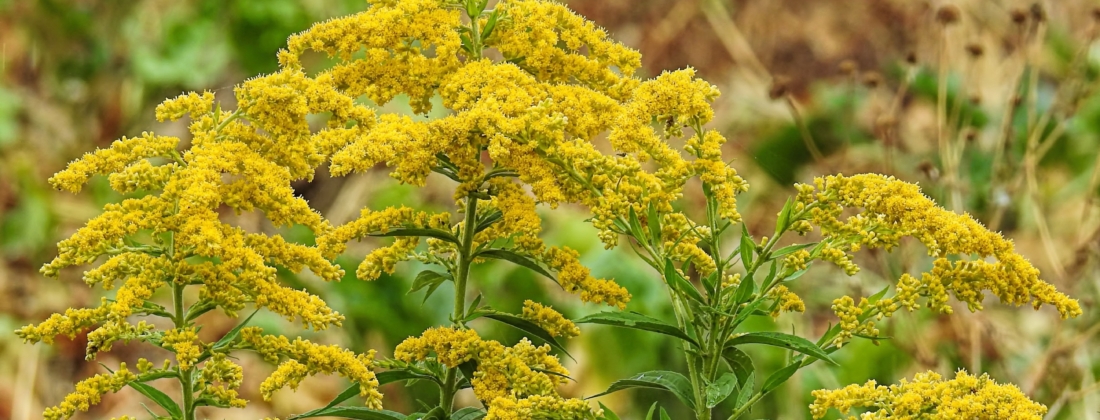
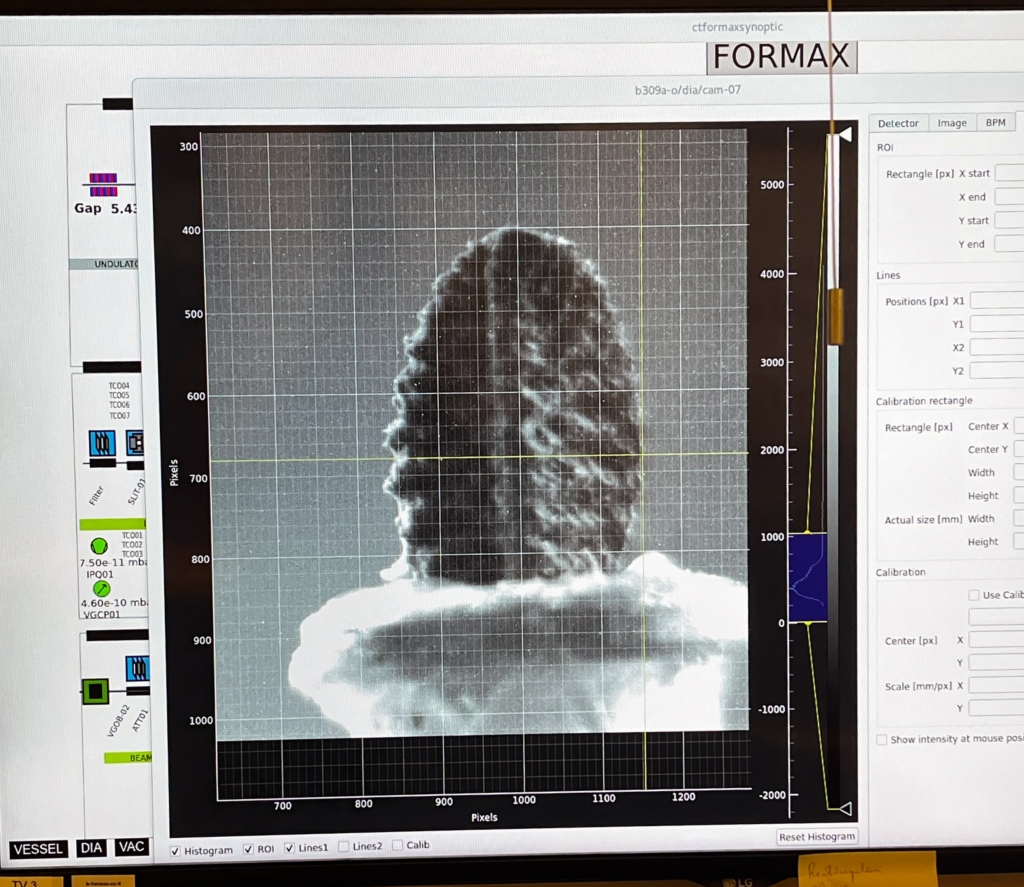
The project chosen by the artist will consist of several parts: a rendering of seeds from pioneer plants, which typically populate areas after natural disasters, including the goldenrod solidago canadensis, seeds from NordGen, the Nordic gene bank in Alnarp, and seeds from the environs of Lund. The seed image will be generated using tomography scanning at ForMAX beamline. Another part of the finished work—experienced through augmented reality on a mobile phone—will display the seed floating over the courtyard (large storage ring) of MAX IV. Other seed data will be collected from elemental maps from NanoMAX beamline and used for experimental print methods. Rainsford is also working on a filmic work following every day activities in different parts of the synchrotron facility such as the laser lab, different beamlines, and work spaces of MAX IV. The artwork is planned for completion in early summer.
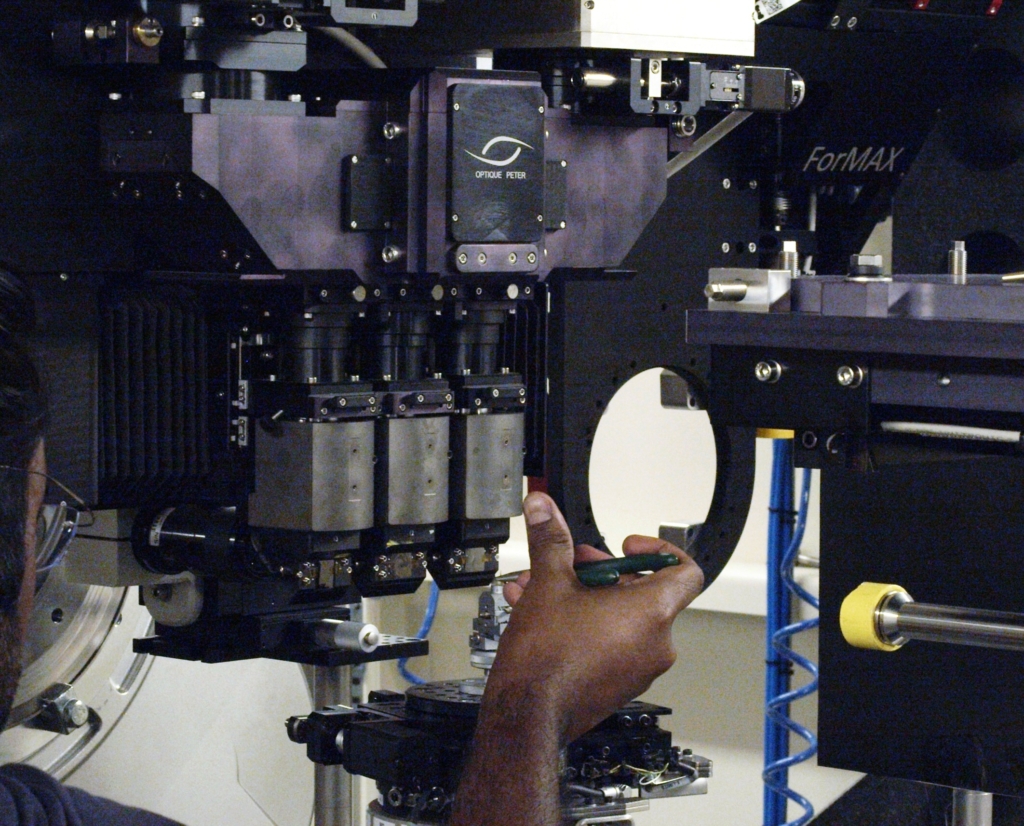
One topic studied at MAX IV is materials research, specifically the structure of materials used in memory devices. Memory holds a significance in Rainsford’s art as well.
“From my artistic perspective, there is something very beautiful in how seeds are memory capsules for life in the way how life moves through that cycle of flower, seed flower, seed, flower, seed and it’s keeping all components of what makes life happen. For me it’s something very basic but awe-inspiring; big and small at the same time that is held in that image of the elements in the seed.”
Rainsford found science fascinating early on and had the chance to learn with frequent visits to a microbiology lab to look through her mother’s microscope. Today her work with documentary film is often through informal collaboration with scientists to explore their research and add a depth of context for the public.
The heart in storytelling
To plan an artistic narrative, Rainsford considers ways in which several small stories might be embedded. For science stories, it may include an introduction focused on another topic that merges the two worlds of science and art.
Stories of art or science both hold an important and equal value for humanity’s sake, she explained. “I look at everything that human beings are doing as a kind of storytelling, whether there is an algorithm or a sculpture, it’s a way to understand and create this world we share.”
Further along these lines, the large-scale environmental problems of today are also tackled differently according to available tools and generational attitudes. “How humanity changes, really it’s not cerebral, we change from emotions. So, when you feel something, you act…and for me that’s a key when looking at environmental storytelling as well. I think the story with the seed also contains this, that seeds play a role in this big change,” said Rainsford.